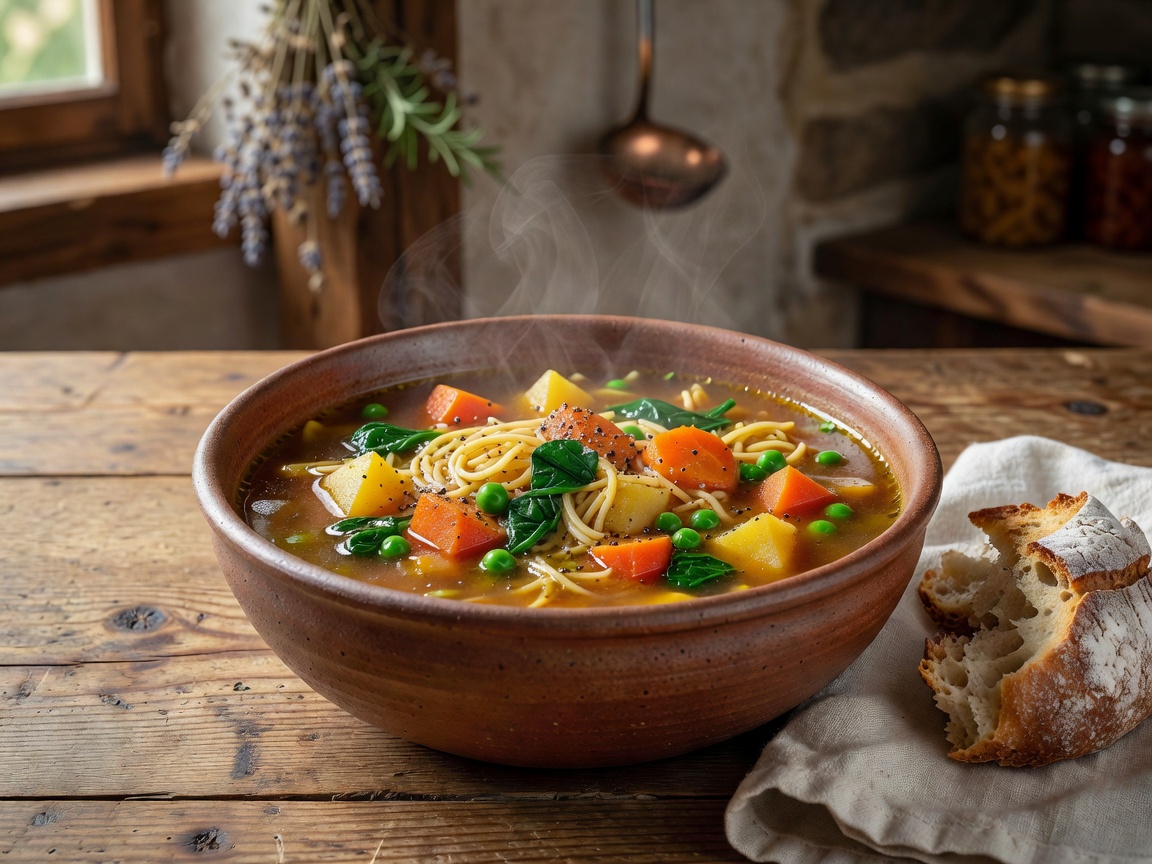
Some dishes become less familiar because the conditions that supported them have changed. A local grain may give way to a more widely traded flour; a household may no longer have time to simmer a pot for hours; a seasonal food once gathered nearby may now be difficult to obtain. That change does not mean the dish has disappeared everywhere. It may survive under another name, as a family variation or in a community whose food history is less visible in print.
Place, ingredients and practical choices
Regional cooking often begins with availability rather than a fixed culinary identity. Climate, soil, livestock, market access and storage all shape what a cook can use. In a coastal place, fish might be preserved or eaten fresh according to season and access. In inland farming areas, grains, pulses, dairy or stored vegetables could form the practical basis of a meal. These are broad patterns, not rules: exchange, movement and personal preference complicate every regional picture.
Even a well-known dish usually has more than one version. A written recipe may name proportions that a household cook adjusted by eye. Another version might use a different fat, herb or grain because those were available locally. Recipes transmitted orally can preserve techniques while changing ingredients from generation to generation. When comparing versions, it helps to ask who recorded each one, when, and for whom it was intended.
Rural kitchens, towns and moving recipes
Rural cooking might draw on home gardens, farm produce and shared seasonal work; an urban cook could rely more heavily on markets, specialist shops and purchased fuel. Neither setting was uniform. Town markets connected producers and customers, while migration carried familiar methods into new kitchens. A dish that travelled might take on local ingredients and eventually feel at home in its new setting.
Migration also complicates claims of origin. Foods associated with a region can have several influences, and names may cross borders. Where accounts differ, it is more accurate to describe a documented regional version than to declare a single birthplace. Later national or commercial versions may standardise a recipe that once varied considerably.
Seasonality and adaptation
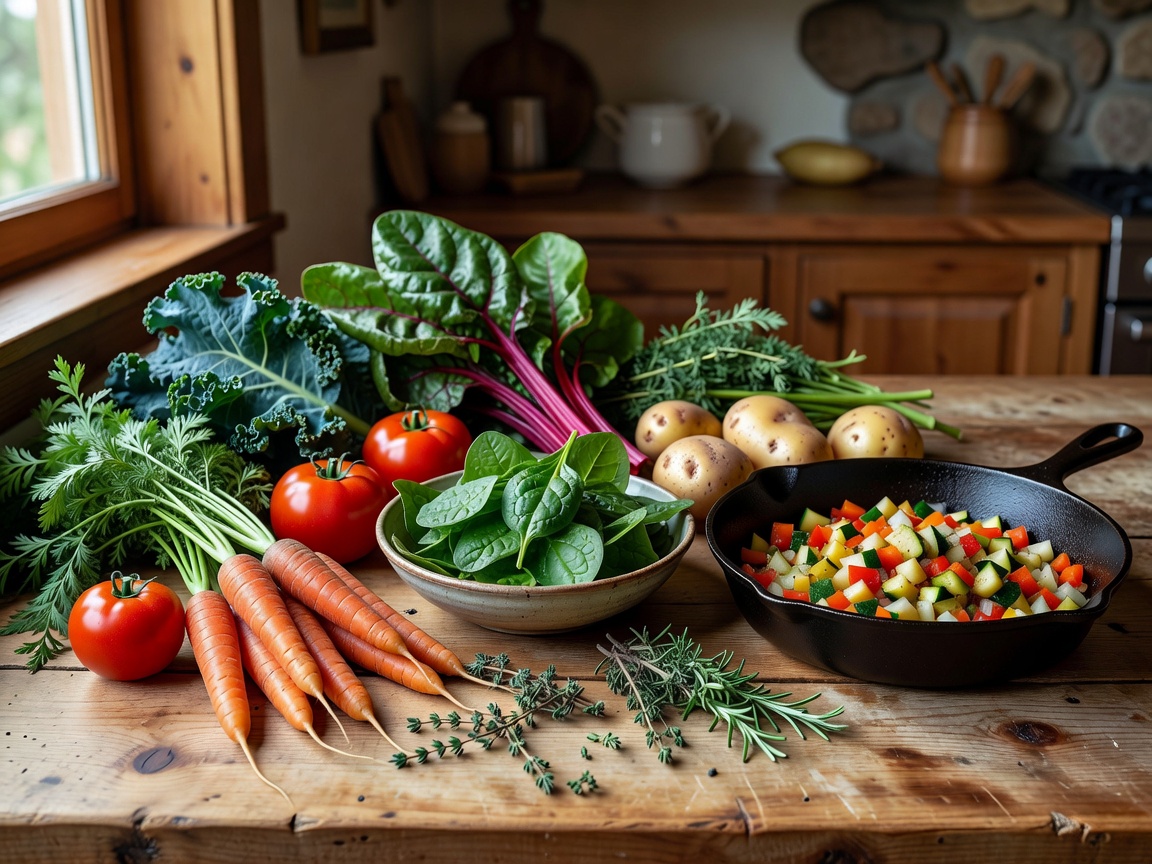
Seasonal dishes are especially vulnerable to being misunderstood as fixed recipes. A soup, pie or cooked grain dish might be one way of using what was plentiful at a particular time. Preserving, drying or storing ingredients extended their usefulness, but storage conditions and methods differed from household to household. When agriculture changes or fresh foods become available year-round through wider supply chains, the seasonal rhythm can become less apparent.
Adaptation is not necessarily a loss of authenticity. Substitutions can show how a recipe remained useful. But a modern version should not be presented as an unchanged historical original unless the evidence supports that claim. A careful account separates what a source actually says from what a present-day cook chooses to do.
What We Know
Recipes and food accounts show that regional cooking reflects local production, exchange, season and domestic practice. The surviving record is uneven: printed books preserve some voices, while routine household knowledge was often passed on informally. Variation is normal, and recipes commonly change as cooks respond to new ingredients or circumstances.
What Remains Uncertain
For many dishes, the precise first version, original name or single place of origin cannot be established. A later printed recipe does not prove that it was the first version. Family accounts are valuable records of memory, but a remembered origin and a documented historical claim are not the same kind of evidence. We keep those distinctions visible rather than smoothing them away.
Good For
This approach is useful when comparing local food traditions, interpreting a family recipe or adapting an older dish with care. Begin with the ingredients named, note what is substituted, and record the context. That process can make change legible instead of disguising it.
What to Look For
- Ingredient names that point to a place, season or historical supply.
- Differences between household, printed and later commercial versions.
- Preparation details that reveal storage, fuel or available equipment.
- Careful wording around disputed origin stories.
A forgotten dish is not always waiting to be restored to one supposedly perfect form. Often its story is better understood as a set of related versions, each shaped by a particular kitchen and moment.